What is Skin Hydration Ingredients and How Do They Work?
Skin hydration is essential for healthy, glowing skin. Understanding Skin Hydration Ingredients is crucial in choosing the right products for your skincare routine. These ingredients help maintain moisture levels, prevent dryness, and improve skin texture.
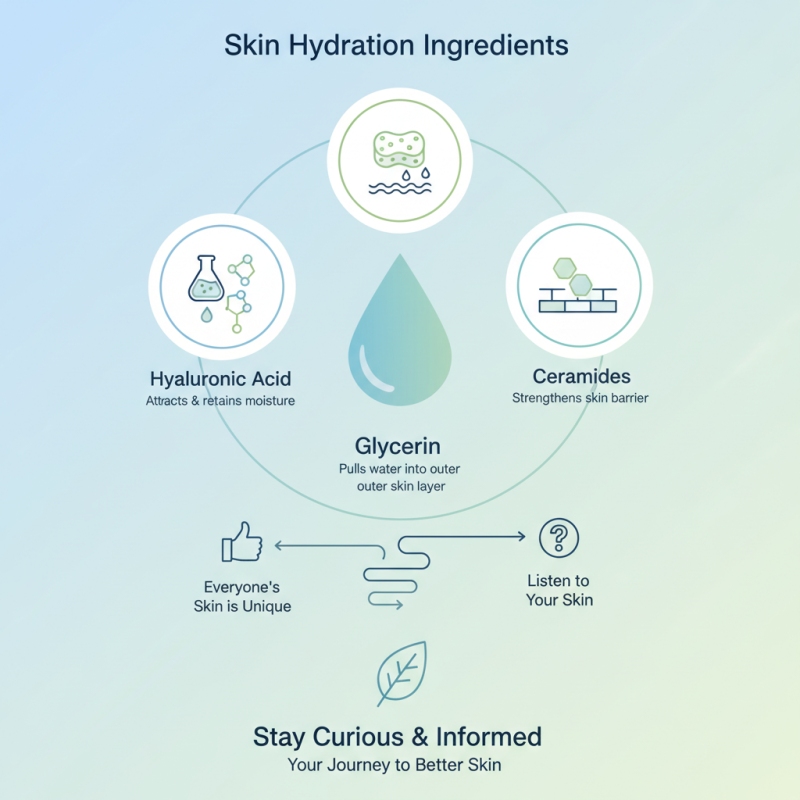
Common components include hyaluronic acid, glycerin, and ceramides. Hyaluronic acid attracts and retains moisture in the skin. Glycerin acts as a humectant, pulling water into the outer layer of the skin. Ceramides strengthen the skin barrier, enhancing moisture retention.
However, not all products work for everyone. Some people may find certain ingredients irritating. Others may not see immediate results. It's vital to test products and listen to your skin's needs. Stay curious and aware as you explore the world of skin hydration. Your journey to better skin starts with informed choices.
Understanding Skin Hydration: An Overview of Key Ingredients
Proper skin hydration is essential for maintaining healthy skin. Key ingredients play significant roles in this process. Hyaluronic acid is one of the most talked-about. According to a recent survey by the Journal of Clinical and Aesthetic Dermatology, over 60% of dermatologists recommend it for its remarkable ability to hold up to 1,000 times its weight in water. This makes it a powerhouse for skin moisture retention.
Another vital ingredient is glycerin. This humectant draws moisture from the environment into the skin. A study published in the International Journal of Cosmetic Science noted that glycerin effectively improves skin hydration levels, especially in dry conditions. However, relying solely on it without a good occlusive layer can lead to moisture loss. It's a delicate balance.
Ceramides are also crucial. They are lipids found in the skin, forming a barrier to lock in moisture. According to the American Journal of Clinical Dermatology, creams containing ceramides can reduce transepidermal water loss by up to 30%. Yet, one must remember that not all ceramides are the same; sourcing and formulation matter greatly. Each ingredient has strengths, but combining them is key for optimal hydration.
Understanding Skin Hydration: Key Ingredients and Their Efficacy
Mechanisms of Action: How Hydration Ingredients Benefit the Skin
Hydration ingredients play a crucial role in maintaining skin health. Understanding their mechanisms helps us appreciate their benefits better. Ingredients like
hyaluronic acid hold moisture, drawing it into the skin. This compound can retain up to 1,000 times its weight in water. Studies show that using products with hyaluronic acid can significantly improve skin moisture levels.
Glycerin is another effective hydration agent. This humectant pulls water from the air into the skin, providing an added dose of moisture. In clinical trials, glycerin has improved skin barrier function, leading to reduced dryness and irritation.
Tips: Always check product labels for hydration ingredients. Look for formulations that combine multiple hydrators for optimal results. Remember to reapply hydration, especially in dry climates.
Not all skin types respond the same way. Some may experience irritation from certain hydration ingredients. Patch testing new products can prevent adverse reactions. Pay attention to how your skin reacts and adjust your routine accordingly. After all, hydration is not one-size-fits-all. The right ingredients can transform your skin, but it may require some trial and error.
Types of Hydration Ingredients: Natural vs. Synthetic Options
When it comes to skin hydration, ingredients play a crucial role. There are two main types: natural and synthetic.
Natural ingredients include aloe vera, honey, and jojoba oil. These substances offer inherent moisture and nutrients.
While they can be gentler on the skin, they may not work for everyone. Allergies or sensitivities can arise unexpectedly, prompting reevaluation of their use.
Synthetic hydration ingredients include hyaluronic acid and glycerin. These compounds can attract and retain moisture effectively.
They provide a lightweight feel, which many users prefer. However, some may experience irritation or breakouts.
It is essential to test products carefully and observe how your skin reacts over time. Not every synthetic option is created equal, and formulators vary widely in quality.
Ultimately, the choice between natural and synthetic hydration ingredients is personal. Individual skin types and preferences play a significant role.
Sometimes, combining both may yield better results. Experimentation is part of the process. Understand your skin's unique needs and be open to change. You might discover new favorites or recognize past mistakes. Taking time to explore can lead to more effective hydration solutions.
Application and Usage: Best Practices for Skin Hydration
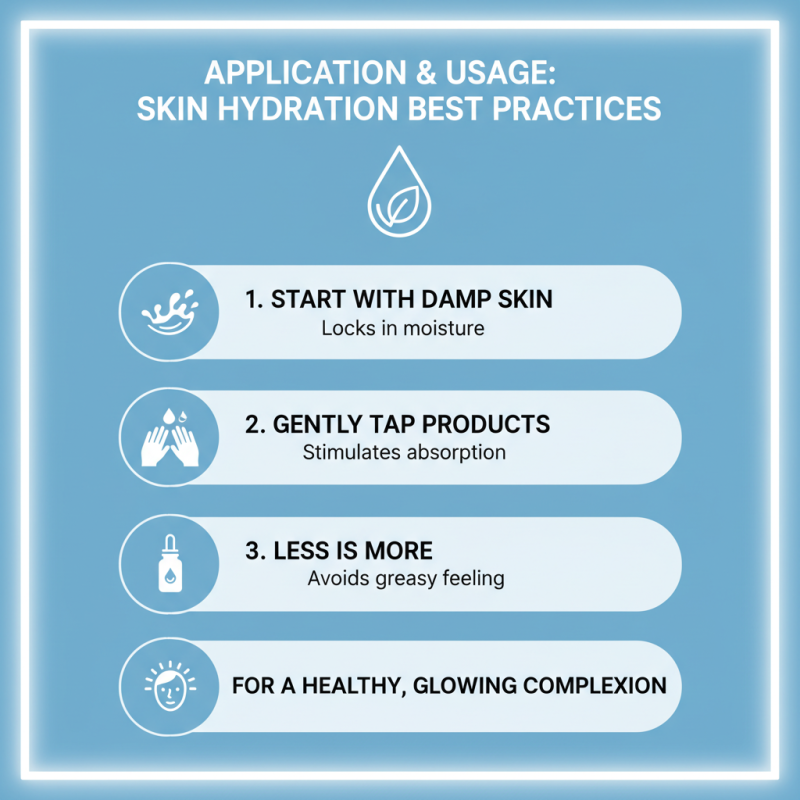
Proper skin hydration is essential for maintaining a healthy and glowing complexion. To achieve this, understanding the right application and usage techniques is crucial. Start with clean, damp skin. This helps to lock in moisture. Gentle tapping of hydrating products onto the skin can stimulate absorption. Remember, less is often more. Applying too much can lead to a greasy feeling, which is not ideal.
Incorporating hydrating ingredients like hyaluronic acid or glycerin is beneficial. These substances draw moisture from the air into your skin. Application frequency is also important. Consistent application can yield better results. However, overusing products might irritate your skin. Always pay attention to your skin's reactions. A patch test can be a good practice before full application.
Layering products can enhance hydration. Start with a serum, followed by a moisturizer. Make sure each layer absorbs before applying the next. Keep an eye on seasonal changes. Different weather conditions can affect hydration needs. During dry months, you may need richer textures. Reflect on your routine and adjust accordingly for the best results.
Potential Benefits and Risks: A Balanced Perspective on Hydration Ingredients
Skin hydration ingredients play a critical role in maintaining skin health. These ingredients often include humectants, emollients, and occlusives. Humectants attract moisture from the environment. Emollients soften and smooth the skin. Occlusives form a barrier to prevent water loss. Understanding how they work can help in choosing the right products for individual needs.
However, using hydration ingredients comes with benefits and potential risks. Over hydrated skin can lead to irritation. Some individuals might experience breakouts from heavy creams. It’s essential to find a balance. Choosing the right product based on skin type is crucial.
Tips: Start with a patch test before fully applying any new product. Monitor how your skin reacts. Adjusting your routine as seasons change can also be beneficial. Dry air in winter can require heavier hydration. Conversely, lighter formulas may serve better in humid climates. Remember, everyone's skin is unique. What works for one person may not work for another, so listen to your skin's needs.
What is Skin Hydration Ingredients and How Do They Work? - Potential Benefits and Risks
| Ingredient |
How It Works |
Potential Benefits |
Potential Risks |
| Hyaluronic Acid |
Attracts and retains moisture in the skin |
Improves skin elasticity and reduces fine lines |
Possible irritation for sensitive skin |
| Glycerin |
Acts as a humectant, drawing moisture from the air |
Hydrates skin and enhances barrier function |
Can be sticky if used in high concentrations |
| Urea |
Promotes exfoliation and moisture retention |
Softens rough skin and improves hydration |
May cause skin irritation in some individuals |
| Sodium PCA |
Natural moisturizer that binds water in the skin |
Enhances hydration and softness |
Potentially irritating for very sensitive skin |
| Panthenol |
Converts to vitamin B5 and helps retain moisture |
Soothes and heals distressed skin |
Rarely allergic reactions in certain individuals |