
In 2026, powdered beets are showing up in smoothies, oatmeal, and pre-workout drinks. Their appeal is simple: a spoonful can add beet flavor and color without peeling or roasting fresh roots. But convenience alone does not make a food beneficial. Powdered Beets Benefits depend on the product, serving size, and a person’s overall diet.
Beets naturally contain betalain pigments and dietary nitrates. Research suggests dietary nitrates may support normal blood flow and exercise performance in some people, although results vary. A powder’s nitrate content can also differ with processing and storage, so the label may not tell the whole story. Check the ingredients and serving instructions. Some blends contain added sugar or other ingredients.
Small details matter. A teaspoon stirred into a berry smoothie may taste earthy, while mixing it into plain water can produce a stronger, less pleasant flavor. Powder is shelf-stable and easy to measure. It is not identical to a serving of whole beets, especially if processing reduces fiber. Not magic.
This guide explores the potential benefits, practical uses, and limits of beet powder, with attention to what evidence can—and cannot—show. People taking blood-pressure medication or managing a health condition should ask a qualified healthcare professional before making a concentrated supplement part of their routine. That caution is not a reason for alarm; it is a sensible step. And, honestly, research on powders is less complete than marketing often suggests. A balanced view starts with the product label, realistic expectations, and the rest of the plate.
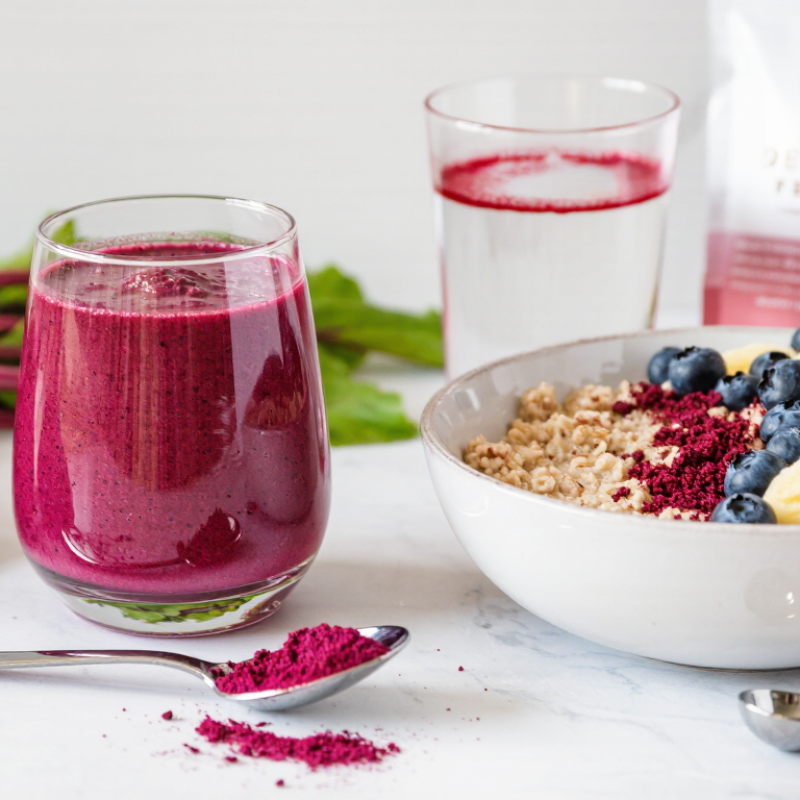
Powdered beets are whole beet roots that have been washed, trimmed, dried, and milled into a fine powder. Producers may use hot-air drying or freeze-drying; the method can affect color, flavor, and how the powder mixes. The result is convenient, but it is not identical to fresh beetroot. Drying removes water and concentrates what remains.
USDA FoodData Central lists raw beets as providing 43 calories, 9.56 grams of carbohydrate, and 2.8 grams of fiber per 100 grams. Those figures describe fresh beets, not powdered products, whose values depend on moisture and processing. Check the product’s nutrition label rather than applying fresh-beet numbers directly. Small details matter.
Beet varieties and growing conditions can also influence the roots’ natural nitrate levels. A review by Clifford and colleagues in Nutrients (2015) describes variation among beetroot products, a useful reminder that powders are not nutritionally interchangeable. Color is no guarantee of potency, either. Manufacturers’ drying and storage practices may affect the final product, and labels do not always explain those steps clearly. That uncertainty deserves attention.
Beet powder’s vivid red color comes from betalains, a family of plant pigments. A serving also supplies carbohydrates and, depending on processing, small amounts of fiber, potassium, folate, and manganese. Amounts vary with the crop, production method, and scoop size. Check the nutrition label; powders made from beet juice may contain less fiber than whole-root powders. That detail matters.
Beets also contain dietary nitrate. The body can convert nitrate into nitric oxide, a molecule involved in blood-vessel function. Research on beet products suggests possible effects on exercise performance or blood pressure, but results vary by product and person. Powder-specific evidence is less consistent. Betalains show antioxidant activity in laboratory studies, though that does not prove a scoop prevents disease.
The taste is earthy and faintly sweet, so a teaspoon can color yogurt, oatmeal, or a smoothie. It can also overpower delicate flavors. Not every scoop. If you try it, follow the package serving and compare labels for added sugar and serving size. Powder is a convenient ingredient, not a substitute for vegetables or individualized medical advice.
| Nutrient or plant compound | What it contributes | Potential benefit | Important context |
|---|---|---|---|
| Dietary nitrate | Beets naturally contain nitrate, which the body can convert to nitric oxide. | Nitric oxide helps relax blood vessels; beetroot products may support blood flow and exercise performance in some people. | Nitrate content varies substantially by beet, growing conditions, and processing. Powder is not automatically equivalent to the preparations used in studies. |
| Betalains | Red and yellow beet pigments, including betanin, provide much of the vegetable’s characteristic color. | They have antioxidant activity in laboratory research and contribute to beet powder’s plant-compound profile. | Amounts depend on beet variety and processing. Laboratory antioxidant activity does not prove a specific health outcome in people. |
| Folate (vitamin B9) | Beets are a natural source of folate, a vitamin needed for DNA synthesis and normal cell division. | Can contribute to overall folate intake when the powder retains this nutrient. | The amount per serving is product-specific; drying and serving size affect the final nutrient profile. |
| Potassium | A mineral naturally found in beets and involved in fluid balance and normal muscle and nerve function. | May add to dietary potassium intake as part of a balanced eating pattern. | Check the product’s nutrition label for the amount. People advised to limit potassium should follow guidance from their healthcare professional. |
| Manganese | A trace mineral used by enzymes involved in metabolism and antioxidant defense. | Can contribute to manganese intake, depending on the powder’s composition and serving size. | Beet powder should not be assumed to provide a particular amount without product-specific nutrition data. |
| Dietary fiber | Some beet powders retain fiber from the whole vegetable; concentrated extracts may contain little or none. | Fiber supports normal digestion and can help make meals more filling. | Fiber content differs by product and processing method. Review the ingredient list and nutrition facts. |
Note: Beet powder is not a standardized product. Nutrient and nitrate levels vary, so use the package label for serving-specific amounts. Potential benefits do not replace medical advice or treatment.
Powdered beets may support blood flow because beetroot nitrate can be converted into nitric oxide, which helps relax blood vessels. The effect is not instant or guaranteed. The NIH Office of Dietary Supplements notes that exercise studies commonly use about 5–9 mmol of nitrate, taken roughly 2–3 hours before activity. Powder contents vary, so a scoop does not automatically match the amounts used in research.
For exercise, improved blood flow may help deliver oxygen during repeated efforts, such as cycling uphill or running intervals. A 2017 systematic review in Nutrients reported potential endurance benefits from beetroot juice, but results differed across studies and participants. Benefits appear less predictable in highly trained athletes. Small details matter: dose, timing, training level, and even the nitrate content of the powder.
Check whether a product reports nitrate content, rather than relying only on grams of beet powder. That distinction is easy to miss. Powder can also taste earthy and may turn a drink deep red; neither detail tells you whether it will improve performance. People taking blood-pressure medicine or with relevant medical conditions should ask a clinician before using concentrated beet products.
Beet powder may support heart health because beets contain dietary nitrates. The body can convert these compounds into nitric oxide, which helps blood vessels relax. In some studies, beet products have modestly lowered blood pressure, though results vary. Powder is not a guaranteed treatment. Its nitrate content also differs by product and serving size.
For digestion, the details matter. Whole beets provide fiber, but some powders contain much less, especially when made from concentrated juice. Check the nutrition label rather than assuming the powder works like a serving of vegetables. A small spoonful stirred into oatmeal or yogurt can add earthy flavor and color. Drink enough water, too. That matters. If you notice bloating, reduce the amount; beet powder can be an awkward fit for some stomachs. Research on powdered forms remains limited, so heart and digestive effects should be viewed as possible benefits, not promises.
Beet powder offers a convenient way to add beetroot to smoothies, yogurt, or water. Its dietary nitrates may support nitric oxide production, which helps blood vessels relax. Research suggests possible benefits for blood pressure and exercise performance, but results vary. Powder is not a proven treatment. It can also contain less nitrate than fresh beetroot, depending on processing and storage. Check the label; “beet powder” alone does not reveal its nitrate content.
Safety deserves attention. Beetroot can turn urine or stool pinkish-red. Usually, this is harmless. If the color persists or seems unusual, seek medical advice rather than assuming it came from beets. People with a history of calcium oxalate kidney stones may need to limit high-oxalate foods. Ask a clinician before using concentrated beet products if you take blood-pressure medicine or have a relevant health condition. A small serving first is sensible. That matters.
When comparing products, look for a short ingredient list, a clearly stated serving size, and independent testing for identity and contaminants. Prefer products that disclose nitrate amounts, though many do not. Avoid claims promising dramatic results. Mix a measured amount into a drink and note how you feel during exercise; stomach upset can happen. I would not treat a supplement label as proof of effectiveness. Some labels are vague, and that is worth questioning.
Beetroot’s dietary nitrate may support blood pressure and exercise performance, although effects vary. The chart shows the EFSA acceptable daily intake (ADI) for nitrate, calculated for different body weights.
The ADI is 3.7 mg of nitrate per kilogram of body weight per day, from all dietary sources. It is a long-term safety benchmark—not a beet-powder serving target. Nitrate content varies between products, so check the label; consult a healthcare professional if you have a medical condition or take blood-pressure medication.
Source: EFSA, Nitrate in vegetables.
