
Choosing among Top China Private Label Hair Cosmetics Manufacturers requires more than comparing factory prices. It requires evidence. A reliable partner should demonstrate formulation expertise, stable sourcing, batch traceability, testing records, and practical experience with different hair textures. The product must perform consistently under real bathroom conditions: humid air, hard water, heat styling, and repeated washing.
Grand View Research estimates that the global hair care market reached approximately USD 91.6 billion in 2023. Its report also forecasts continued growth through 2030, driven by treatment products, scalp care, and premium formulations. Meanwhile, NielsenIQ has reported strong private-label momentum across beauty and personal care markets. These figures suggest opportunity, but they do not guarantee quality. A large market can still hide weak suppliers.
Cosmetic chemist Perry Romanowski offers a useful reminder: “A cosmetic product is only as good as its formulation and manufacturing process.” That principle matters in Private Label Hair Cosmetics. Buyers should inspect ingredient documentation, stability testing, preservative systems, packaging compatibility, and minimum order requirements. Claims such as “natural,” “repairing,” or “professional” also need careful verification.
There is no perfect manufacturer. Not even close. Some factories excel at shampoos but struggle with styling products. Others offer attractive samples yet lack reliable scale-up procedures. This guide compares leading Chinese manufacturers through a practical E-E-A-T lens: demonstrated experience, technical knowledge, transparent evidence, and dependable business practices. The goal is not to praise every supplier. It is to identify which partners can turn a promising formula into a consistent, compliant, and commercially realistic hair-care line.
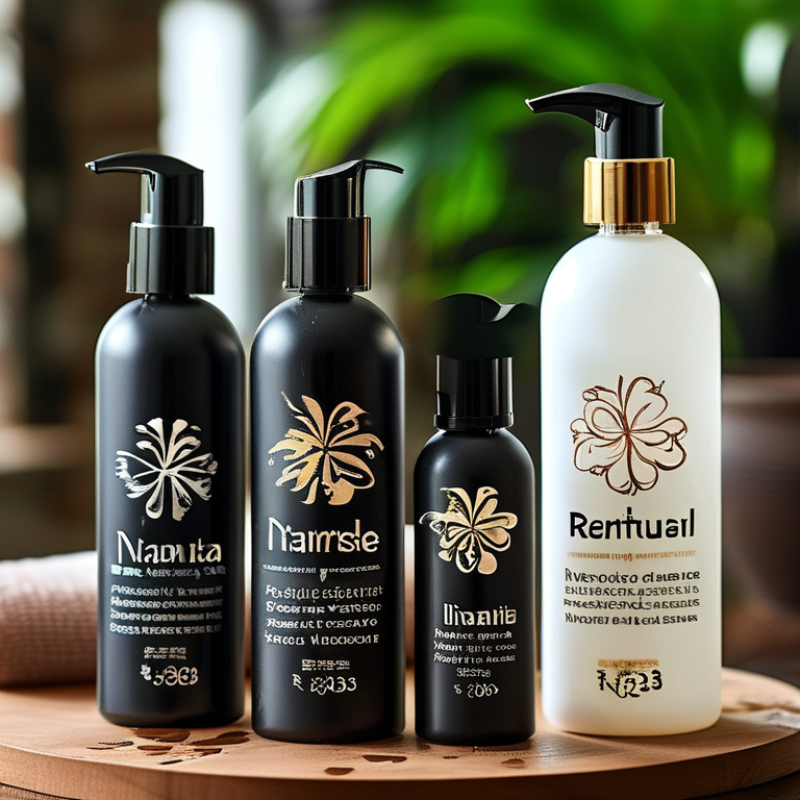
A private label hair cosmetics manufacturer in China does more than fill bottles with a buyer’s logo. It develops formulas, manages ingredients, controls production, and supports regulatory documentation. This matters as hair care demand grows. Grand View Research valued the global hair care market at about USD 91.6 billion in 2023, with continued growth expected through 2030.
A capable manufacturer should offer laboratory formulation, stability testing, microbial testing, and batch traceability. ISO 22716-based manufacturing practices are also valuable. However, a certificate alone proves little. Buyers should inspect production records, testing methods, factory hygiene, and sample consistency. The China National Medical Products Administration also requires proper compliance under the Cosmetic Supervision and Administration Regulation. Hair dyes may require stricter registration procedures than ordinary shampoos.
Private label usually means adapting an existing formula or creating a customized one. Good suppliers explain the difference clearly. They should disclose minimum order quantities, lead times, packaging limits, and ingredient documentation before signing an agreement. Mordor Intelligence identifies China as a major hair care market with ongoing demand for specialized products, including scalp and damage-care solutions. Still, market data cannot replace factory verification. I would question unusually low prices. They may reflect weaker testing, unstable supply, or hidden packaging costs. Real manufacturing strength appears in repeatable batches, transparent communication, and practical technical support.
China’s hair cosmetics market rewards careful supplier evaluation, not attractive catalogues alone.
The National Bureau of Statistics reported cosmetics retail sales of RMB 414.2 billion in 2023, rising 5.1% year on year. This growth increases factory competition, but capacity claims still require verification.
Visit the production site when possible. Check separate areas for weighing, filling, packaging, and quarantine. Ask for batch records, ingredient traceability, microbiological results, and stability testing. A reliable manufacturer should explain its quality system clearly and provide current ISO 22716 or equivalent evidence. Request samples from different batches, not only a polished showroom sample. Small details matter, such as cap torque, pump consistency, label adhesion, and leakage after transport.
Review the supplier’s compliance knowledge under China’s cosmetics regulations and your target-market requirements. Confirm responsible-person support, ingredient documentation, safety assessments, and product filing or registration procedures where applicable. Euromonitor International’s 2024 beauty and personal care analysis highlights continued premiumization and demand for efficacy-led products in China. That makes substantiated claims and repeatable formulation control especially important. A low minimum order quantity can help testing, but it may also indicate limited purchasing power or unstable production planning. Ask for audited lead-time records. Do not rely on promises alone. My own evaluation preference is practical: compare three factories using the same brief, then score quality, communication, testing depth, and corrective-action speed. A spreadsheet helps. It can still miss human judgment.
China’s experienced private label hair cosmetics manufacturers commonly develop shampoos, conditioners, masks, oils, scalp serums, and styling creams. Formulas may target dryness, breakage, frizz, oily scalps, or color-treated hair. A capable supplier adjusts surfactant systems, conditioning agents, fragrance levels, and viscosity for each market. Small test batches matter. They reveal separation, leaking pumps, or a scent that becomes unpleasant after heating.
Customization usually covers formula development, packaging, filling, labeling, and production scale. Buyers can request sulfate-free cleansing, silicone-free options, botanical extracts, or fragrance-free versions, subject to safety reviews and local requirements. Manufacturers may provide sample rounds, ingredient specifications, stability data, microbiological testing, and compatibility checks between formulas and bottles. A practical team also confirms batch coding, carton dimensions, and transport conditions before mass production. Details prevent expensive rework. However, sample approval does not prove every future batch will match perfectly; documented quality controls and retained samples still deserve attention.
Professional manufacturers often support custom colors, bottle shapes, pump types, and multilingual artwork. They can recommend PET, HDPE, glass, or aluminum containers based on product viscosity and shipping risks. One weakness remains: some suppliers promise too much during early discussions. Buyers should compare claims with test reports, factory records, and clear acceptance standards. That discipline supports a more reliable private label hair care line.
China’s private label hair cosmetics sector is growing with stricter quality expectations. Grand View Research estimated the global hair care market at about USD 91.9 billion in 2023. This scale increases pressure on manufacturers to prove consistency, not just offer low prices.
A reliable factory should operate under ISO 22716 Good Manufacturing Practices. This standard covers hygiene, equipment cleaning, batch records, storage, and staff training. China-based production should also follow applicable NMPA requirements and national cosmetic standards. Export projects may require additional checks under EU or US rules. ISO’s 2022 Survey recorded more than 1.26 million ISO 9001 certificates worldwide. However, certification alone is not proof of product quality. I would inspect the certificate scope, audit date, and manufacturing site. Some suppliers present paperwork that does not cover cosmetics production. That deserves careful questioning.
Tips: Request three recent batch records, stability data, microbial test results, and raw-material specifications. Ask to observe a filling line, including clean surfaces, labeled containers, and controlled temperature logs. Quality teams should test viscosity, color, fragrance, pH, and packaging compatibility. Retain samples from every batch. A practical weakness remains: small private label orders may receive less attention than large contracts. Buyers should define acceptance limits before production, then approve a pilot batch. Independent laboratory testing adds cost, but it can reveal contamination or labeling errors before shipment.
The chart compares compliance and quality-control requirements commonly applicable to ordinary hair cosmetics and special cosmetics such as hair dyes. A value of 1 means the requirement or control is generally applicable, while 0 means it is not triggered by that product category. ISO 22716-aligned GMP practices are widely used as a manufacturing quality benchmark, but ISO 22716 certification itself is not a universal legal requirement in China.
Regulatory basis: China’s Cosmetics Supervision and Administration Regulation and related NMPA registration and filing requirements. Requirements may vary according to product formulation, claims, intended use, and classification.
Choosing the right Chinese private label hair cosmetics manufacturer requires more than comparing prices. McKinsey & Company’s 2023 beauty industry report expects global beauty sales to approach $580 billion by 2027. That growth increases competition, but it also raises quality expectations. Visit the factory if possible. Check batch records, stability-testing reports, ingredient traceability, and production capacity. A clean laboratory is useful, but consistent documentation matters more.
Ask whether the manufacturer follows ISO 22716 cosmetic good manufacturing practices. Review its experience with shampoos, conditioners, masks, or scalp treatments similar to your product. Request pilot samples before signing a large order. Test fragrance strength, viscosity, pump performance, and packaging leakage after transport. Grand View Research valued the global hair care market at over $90 billion in 2023, showing strong demand but also crowded shelves. Low pricing alone can hide weak testing or unstable supply.
Tips: Put every specification in writing. Include formula ownership, inspection rights, lead times, defect thresholds, and corrective-action procedures. Ask for recent third-party test reports, not screenshots. Confirm the factory can support your target export markets. A supplier may promise everything during a sales call. That is not proof. I have found that small trial orders reveal more than polished presentations. Leave room for revision; first samples are rarely perfect.
