What Are the Top Organic Cosmetic Ingredients for 2026?

Organic Cosmetic Ingredients are moving from niche label language into mainstream product planning. Grand View Research estimated the global organic personal care market at USD 21.4 billion in 2023 and forecast a 9.1% compound annual growth rate from 2024 to 2030. This is a market estimate, not proof that every organic ingredient performs better. Still, it signals growing commercial attention to sourcing, traceability, and formulation choices.

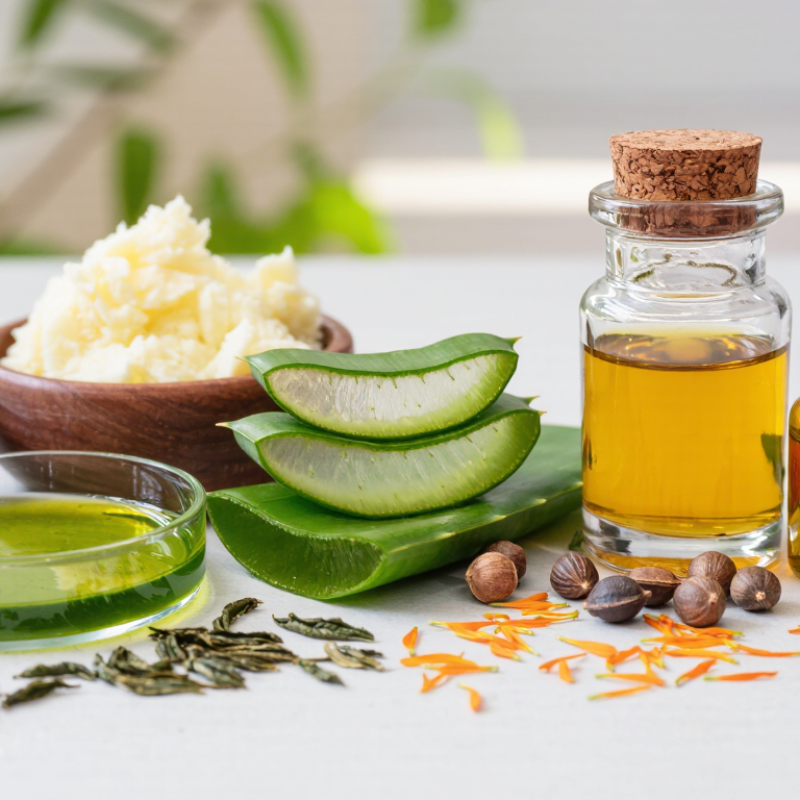
For 2026, ingredient conversations are likely to include aloe vera for lightweight hydration, jojoba oil for emollience, shea butter for richer textures, and green tea extracts for antioxidant-focused formulas. Rosehip oil and calendula may also appear in facial oils and soothing products. Their value depends on more than a plant name. Extraction method, ingredient quality, stability, and compatibility with the finished formula all matter. The label alone tells only part of the story.

That distinction is easy to miss. “Natural” and “organic” are not interchangeable terms, and certification standards vary by market. Brands should substantiate sourcing and product claims, while consumers can check certifications and full ingredient lists. Market forecasts also carry uncertainty; tastes, prices, and supply conditions can change quickly. The most useful 2026 ingredient guide, then, should weigh evidence and practical performance—not just trend appeal. Some promising ingredients may disappoint in a poorly designed formula. That deserves attention.
What Are the Top Organic Cosmetic Ingredients for 2026?

What “Organic” Means in Cosmetics and How Ingredients Are Evaluated

What does “organic” mean on a cosmetic label? It describes agricultural ingredients and their production, not a guarantee that the finished product is safer or more effective. Look past the leaf. Check which ingredients are certified, how much they contribute to the formula, and whether their origin can be traced.

COSMOS-standard v4.2 sets measurable benchmarks: generally, at least 95% of a product’s physically processed agricultural ingredients must be organic, while at least 20% of the total formula must be organic. Some product types, including rinse-off products, may use a 10% minimum. These thresholds show why water-rich lotions can have different organic percentages from oils or balms. ISO 16128-1 and 16128-2 provide definitions and calculation guidance, but do not certify products or assess their safety.

For a practical check, compare the organic percentage against the finished formula, not just the ingredient list. Ask whether certificates cover the specific raw material and whether processing aids are disclosed. A traceable calendula extract, for example, should have documentation for its agricultural source and processing method. Still, paperwork has limits. Certification criteria vary, and a small label can leave important details unclear. That deserves a second look.
Key Plant Oils, Butters, and Waxes in Organic Skincare

For 2026 organic skincare, the most useful ingredients may be familiar oils, butters, and waxes chosen for their feel and function. Grand View Research estimated the global organic personal care market at USD 21.27 billion in 2023, with projected growth of 9.1% annually from 2024 to 2030. Market growth signals interest, not proof that organic ingredients work better. Small details matter.

Sunflower oil brings linoleic acid and spreads lightly across the skin, making it a practical choice for everyday creams. Jojoba oil is technically a liquid wax, with a smooth, less greasy feel. Shea butter adds richness to dry-skin balms, while cocoa butter creates a firmer texture. Candelilla and carnauba waxes can help stabilize sticks and salves. Their performance depends on the formula, not just the ingredient list.

Freshness counts. Plant oils can oxidize, so opaque packaging, careful storage, and clear shelf-life guidance are useful signals of thoughtful formulation. Organic certification may verify agricultural sourcing, but it does not guarantee suitability for every skin type. Patch testing remains sensible, especially with fragranced or nut-derived ingredients. I would not treat a “natural” label as a shortcut to quality; sourcing and formulation details deserve a closer look.

Key Organic Skincare Oils, Butters & Waxes: Typical Temperature Ranges

This comparison shows approximate freezing-point ranges for liquid oils and melting or softening-point ranges for butters and waxes. Natural composition, processing, and measurement methods can affect these values. Temperature behavior can help formulators choose ingredients for a product’s texture and stability.

Botanical Extracts and Active Ingredients Gaining Attention in 2026

In 2026, organic skincare conversations are focusing on botanical extracts with clear roles, not just appealing labels. Centella asiatica is valued in gentle formulas designed to support the skin barrier. Green tea extract brings antioxidant compounds, while oat extract can help soothe dry, uncomfortable skin. Look for ingredient lists that identify the plant extract and its place in the formula. Details matter.

Bakuchiol, derived from the babchi plant, is gaining attention as a plant-based option in products targeting uneven texture and fine lines. Its effects depend on concentration, stability, and the rest of the formula; it is not a guaranteed substitute for every active. There is a catch. “Natural” does not automatically mean gentle, and botanical extracts can still irritate sensitive skin.

Formulators are also exploring mushroom and licorice-root extracts for hydration and more even-looking tone. Evidence varies by ingredient and product, so specific claims deserve a careful look. Niacinamide may appear alongside botanicals, but it is not a plant extract; organic claims apply to the overall product and its standards, not every active. Check sourcing and testing information, then try a small patch first. I would not assume a longer ingredient list means better results.

What Are the Top Organic Cosmetic Ingredients for 2026? Botanical Extracts and Active Ingredients Gaining Attention in 2026

Ingredient Botanical source and key constituents Cosmetic role Evidence snapshot Formulation considerations Organic and sourcing note
Bakuchiol Obtained from the seeds and leaves of Cullen corylifolium (also known as Psoralea corylifolia); bakuchiol is a distinct plant-derived compound, not a retinoid. Used in facial products targeting the appearance of fine lines, uneven tone, and rough texture. A small 12-week randomized study compared bakuchiol with retinol and reported improvement in photoaging measures in both groups. More research is needed. Stability and compatibility depend on the finished formula. Do not assume it has the same properties or evidence as retinoids. Plant origin does not automatically mean certified organic. Verify the ingredient’s species, plant part, processing, and certification documentation.
Green tea extract Usually from Camellia sinensis leaves; contains catechins, including epigallocatechin gallate (EGCG). Antioxidant-supporting ingredient used in serums, moisturizers, and products for oily or blemish-prone-looking skin. Laboratory and topical research supports antioxidant activity, but results depend on extract composition and the finished product; evidence for cosmetic outcomes is variable. Catechins can be sensitive to oxidation, light, and heat. Extract standardization, packaging, and stability testing matter. Ask for traceability and testing for contaminants. Organic certification does not establish catechin content or clinical performance.
Centella asiatica extract Made from Centella asiatica; commonly discussed constituents include asiaticoside, madecassoside, asiatic acid, and madecassic acid. Used in moisturizers and soothing skin-care products, often formulated for dry or sensitive-feeling skin. There is growing topical research, but results vary by extract, concentration, and product. Ingredient presence alone does not prove a particular benefit. Specify the extract type and marker compounds. Assess the complete formula for irritation and stability. Botanical identity and cultivation conditions can affect extract composition. Request supplier documentation and applicable organic certification.
Colloidal oatmeal Finely milled oat material from Avena sativa; contains starches, proteins, lipids, and avenanthramides. Skin-conditioning and soothing ingredient used in cleansers, creams, and bath products. Has a well-established use as a skin protectant ingredient in the United States when products meet applicable requirements; cosmetic claims still depend on the product and local rules. Particle size and dispersion influence texture. Check compatibility with the product’s preservation system and intended use. Organic status depends on the oat supply and certification. Oat-derived ingredients may be unsuitable for some people with sensitivities.
Aloe vera Typically the inner-leaf gel of Aloe barbadensis; contains water, polysaccharides, and other naturally occurring compounds. Commonly used as a humectant and skin-conditioning ingredient in gels, lotions, and after-sun products. Topical research is mixed and varies by use and preparation. Avoid treating cosmetic aloe products as proven therapies for skin conditions. Because many aloe gels are water-rich, an effective preservation system and suitable packaging are important. Clarify whether the material is inner-leaf gel, whole-leaf extract, or a concentrated powder; these are not interchangeable.
Licorice root extract From species such as Glycyrrhiza glabra; constituents can include glabridin and liquiritin, depending on the extract. Used in products for the appearance of uneven skin tone and in soothing skin-care formulas. Some topical studies investigate licorice-derived compounds, but outcomes depend on the constituent and formulation. Evidence should not be generalized to every licorice extract. Request a clear extract specification and check the finished formula for color, odor, and stability. State the species and extraction method. “Licorice extract” alone does not identify the active profile or organic status.
Rosehip seed oil Pressed from seeds of Rosa species; contains fatty acids, including linoleic and alpha-linolenic acids. Emollient oil used to soften skin and support the skin-conditioning properties of facial oils and creams. Its moisturizing role is consistent with its lipid composition; evidence for specific anti-aging or tone-correcting claims is limited. Unsaturated oils can oxidize. Protect from excessive heat, air, and light, and monitor freshness and odor. Confirm the rose species, seed-oil identity, harvest traceability, and whether the oil itself is certified organic.
Chamomile extract Often from German chamomile (Matricaria recutita) or Roman chamomile (Chamaemelum nobile); composition differs by species and extract type. Used as a skin-conditioning ingredient in creams, cleansers, and products marketed for sensitive-feeling skin. Some constituents have been studied for soothing properties, but evidence for finished cosmetic products is limited and preparation-specific. People sensitive to plants in the Asteraceae family may react to chamomile. Fragrance components and extract type should be considered. Identify the species and plant part rather than relying on the common name alone; verify cultivation and certification records.

Notes: “Gaining attention” describes ingredient interest, not a prediction of market share or proof of efficacy. An ingredient’s botanical origin does not by itself make a finished cosmetic organic; certification rules vary by market. Ingredient research does not establish the performance or safety of every product containing that ingredient.

Selected references: Dhaliwal et al., “Prospective, randomized, double-blind assessment of topical bakuchiol and retinol for facial photoageing,” British Journal of Dermatology (2019), doi:10.1111/bjd.16918; U.S. Food and Drug Administration, OTC skin protectant drug products and colloidal oatmeal provisions, 21 CFR Part 347.

How Organic Cosmetic Ingredients Support Skin and Hair Care

What Are the Top Organic Cosmetic Ingredients for 2026?

How Organic Cosmetic Ingredients Support Skin and Hair Care

Grand View Research estimated the global organic personal care market at about US$21.6 billion in 2023, with continued growth projected through 2030. This market estimate reflects consumer demand, not proof that every organic ingredient works better. For skin, sunflower and jojoba oils provide emollient lipids that soften dry-feeling areas and help reduce moisture loss. Aloe vera can add a light, water-based feel, while colloidal oat is valued for soothing dry, uncomfortable skin. Individual results vary.

For hair, coconut and sunflower oils can coat strands, reduce friction, and improve softness during grooming. Plant-derived glycerin helps attract moisture, though dry air can affect how it feels on hair. Organic sourcing does not guarantee gentleness or performance. Fragrance, oxidation, and a person’s sensitivity still matter. That distinction is easy to miss. A market report describes market activity; it does not establish clinical benefits.

Tips: Choose products with clearly listed ingredients and credible organic certification. Patch-test new formulas, especially on sensitive skin. For hair, try a small amount on the ends first; too much oil can leave fine strands limp.

Safety, Certification, and Labeling Considerations for Organic Ingredients

For 2026, organic oils, aloe, and botanical extracts may appeal to ingredient-conscious shoppers, but “organic” does not automatically mean safer.
Not risk-free. Plant ingredients can still irritate skin or trigger allergies, especially in concentrated formulas. A formulator should review supplier specifications, contaminant testing, and allergen information, then assess the finished product’s stability and microbial safety. A fragrant oil may smell gentle and still trouble sensitive skin.

Certification deserves a close read. Check which ingredients and production steps a certificate covers; certification of one oil does not certify the entire cosmetic. Ask suppliers for current certificates, traceability records, and details about processing aids. Certification schemes have different standards, so avoid treating one seal as universal proof of quality.
Paperwork matters.

Labels should identify ingredients using the naming rules required in the product’s intended market. Organic claims need to match the certified material and available records, while claims about skin benefits should be supported by suitable evidence. Requirements vary by location, so review local guidance before printing packaging.
There is an awkward gap here: a label can look reassuring while saying little about how the finished formula was tested. Clear ingredient lists and specific, supportable claims help shoppers make more informed choices.