As 2026 approaches, brands are looking beyond attractive labels when selecting Organic Cosmetic Ingredients. They are examining origin, processing methods, traceability, and supplier consistency. A botanical extract may look impressive on a product sheet. However, its value depends on cultivation practices, extraction quality, and documented testing.
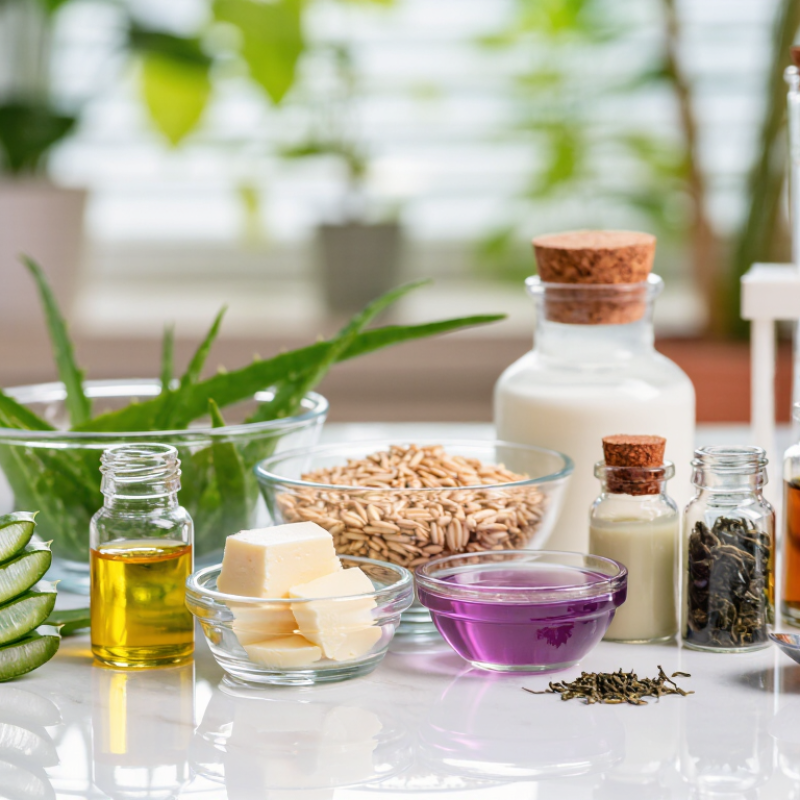
This guide explores ingredients gaining attention across skincare, haircare, and personal care. Aloe vera, jojoba oil, shea butter, oat extracts, green tea, and bakuchiol remain practical choices. Newer options may include fermented botanicals and region-specific plant oils. Each ingredient offers a different sensory profile, formulation purpose, and sourcing challenge. Some perform beautifully in a lightweight serum. Others are better suited to balms or cleansing products.
Details matter.
Responsible sourcing requires more than requesting an organic certificate. Buyers should review the certificate’s scope, issuing body, batch records, allergen information, and contaminant testing. Regional requirements may also differ, so supplier documents should be checked carefully with qualified regulatory professionals. In my experience, small inconsistencies often appear between samples and commercial batches. That gap deserves attention before a large purchase is approved. I have also found that “natural” and “organic” are not interchangeable terms, although marketing materials sometimes blur them. This article offers a practical, evidence-aware starting point for identifying promising ingredients in 2026. It also acknowledges uncertainty, because harvest conditions, supply chains, and consumer preferences can change quickly. The strongest sourcing decision is rarely the trendiest one. It is the one supported by clear records, stable quality, responsible production, and realistic formulation testing.
For 2026 sourcing, organic cosmetic ingredients need more than an “organic” claim. COSMOS and USDA NOP use different frameworks. COSMOS evaluates natural and organic cosmetics through ingredient origin, processing, packaging, and environmental controls. It also sets minimum organic percentages for certified products. Suppliers should provide current certificates, ingredient composition, and processing details.
USDA NOP focuses on agricultural production, handling, and labeling in the United States. An ingredient may qualify as certified organic when farms and handlers follow approved organic practices. The cosmetic manufacturer must still check whether its facility, formula, and label meet applicable NOP requirements. Water, minerals, preservatives, and chemically processed materials need careful classification. They are not automatically organic.
Ask for traceability records, lot numbers, audit dates, and certificates matching the exact ingredient. A certificate alone is not enough. Review solvent use, carrier oils, agricultural origin, and possible contamination risks. For example, a cold-pressed oil should have a clear seed source and batch history. Documentation can look complete while hiding a weak chain of custody. That is where experience matters. Standards also change, and suppliers sometimes interpret them differently. Leave room for technical review, honest questions, and corrective action before approving a material.
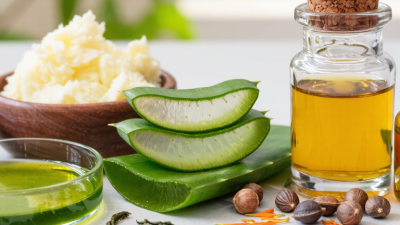
A practical core formula starts with aloe vera, shea butter, jojoba, and argan oil. Grand View Research estimated the global organic personal care market at about USD 21 billion in 2023, with strong growth expected through 2030. That demand rewards ingredients with clear functions, not vague natural claims.
Aloe vera brings a lightweight, water-rich base for calming gels and after-sun products. Request microbiological testing and check whether the powder or juice matches your process.
Shea butter adds body to creams and balms, while its fatty-acid profile supports barrier-focused formulas.
Jojoba offers a stable, wax-like emollient that can improve slip without feeling overly greasy.
Argan oil contributes oleic and linoleic acids, but its sensory quality can change quickly with storage.
Soil Association Certification reported continued double-digit growth in the UK organic beauty and wellbeing market in recent years, reflecting stronger consumer attention to sourcing and certification. Ask suppliers for origin records, crop-year details, allergen information, pesticide documentation, and oxidation data. Certification standards differ across regions, so “organic” should never be accepted without verification. COSMOS-related documentation can help assess permitted processing and traceability, but it does not replace local regulatory review. In practice, I would sample two harvests before approving a large purchase. Natural batches vary. That variation can expose weak formulation work, especially when aloe solids, butter grain, or oil aroma shifts between lots.
Bakuchiol is gaining attention as a plant-based retinol alternative for sensitive-skin formulations. It comes from Psoralea corylifolia seeds, traditionally used in botanical practices. Unlike retinol, it is not a vitamin A derivative. This distinction may reduce concern about common retinoid-related irritation, although individual reactions still vary.
Market data needs careful reading. Recent commercial reports estimate the global bakuchiol ingredient market will grow at a double-digit annual rate through 2030. However, published valuations differ widely because some reports track raw extracts, while others include finished skincare products. Supplier quotations also vary by bakuchiol concentration, extraction method, and certification. A standardized extract with verified bakuchiol content can support more reliable product claims. Low-cost material deserves scrutiny.
In supplier evaluations, request botanical identity tests, assay results, pesticide screening, heavy-metal data, and stability records. Organic positioning requires more than a plant origin. The farming method, solvent system, processing aids, and certification status must be reviewed together. Small pilot batches can reveal odor, color shifts, and compatibility with oils or emulsions. My practical concern is that “gentle” marketing may encourage unrealistic expectations. Bakuchiol still needs controlled testing for irritation, oxidation, and long-term performance. Evidence supports promising cosmetic benefits, but it does not make the ingredient identical to retinol.
| Data Dimension | Verified Data / Market Indicator | Sourcing and Formulation Implication | Reference or Data Note |
|---|---|---|---|
| Ingredient identity | Bakuchiol; INCI name: Bakuchiol; CAS No. 10309-37-2 | Request full identity documentation and confirm that the material is not a blended botanical extract sold as isolated bakuchiol. | European Commission CosIng ingredient database; CAS Registry information. |
| Botanical origin | Obtained from seed or fruit fractions of Cullen corylifolium, formerly known as Psoralea corylifolia. | Verify botanical identification, geographic origin, plant-part traceability, harvest season, and solvent-extraction process. | Botanical and pharmacognosy literature on Cullen corylifolium. |
| Chemical profile | Molecular formula: C18H24O; molecular weight: approximately 256.39 g/mol. | Use HPLC or validated chromatographic testing to confirm assay and detect dilution with carrier oils or other botanical fractions. | Published chemical reference data. |
| Clinical efficacy signal | A randomized, double-blind, 12-week study involving 44 participants reported comparable improvement in wrinkles and hyperpigmentation for 0.5% bakuchiol used twice daily versus 0.5% retinol used once daily. | The evidence supports a retinol-alternative positioning, but the sample size and 12-week duration do not establish equivalence for every skin type or indication. | Dhaliwal et al., International Journal of Cosmetic Science, 2019; PubMed PMID: 29629902. |
| Tolerability signal | The same clinical study reported less facial scaling and stinging in the bakuchiol group than in the retinol group. | Suitable for sensitive-skin product concepts, but finished-product patch testing and human tolerability testing remain necessary. | Dhaliwal et al., 2019; results apply to the tested formulations and protocol. |
| Practical formulation range | 0.5% was the concentration used in the published comparative clinical study. A 0.25%–1.00% screening range is a practical starting point for formulation development; higher levels require independent substantiation. | Choose the level based on assay, sensory profile, stability, claims strategy, and total formula cost rather than marketing convention. | Clinical-study concentration plus formulation-development guidance; not a universal regulatory limit. |
| Market positioning | Bakuchiol is positioned in the growing overlap between anti-aging skin care, sensitive-skin care, vegan beauty, and plant-based active ingredients. | Products can be differentiated through clinically measured wrinkle, tone, and tolerability claims rather than relying only on “natural retinol” language. | Category-positioning analysis; the ingredient does not have a dedicated global trade classification. |
| Trade-data limitation | Bakuchiol is generally reported within broader botanical extracts, cosmetic ingredients, or skin-care preparation categories rather than under a dedicated HS code. | Exact global import value, export volume, and market share cannot be reliably calculated from customs data alone. Supplier quotations and purchase volumes should be used for bottom-up market sizing. | HS classification practice and UN Comtrade data structure; classification varies by product form and customs authority. |
| Organic status | Plant-derived does not automatically mean organic. Organic status depends on cultivation, processing, chain of custody, and certification requirements. | Request a current organic certificate, certificate scope, transaction certificate where applicable, and evidence that the exact production site is covered. | COSMOS standards and ISO 16128 guidance; certification requirements differ by market and certifier. |
| Quality specification | A robust specification should include bakuchiol assay, appearance, odor, density or refractive index, residual solvents, heavy metals, pesticides, microbial limits, and oxidation indicators. | Set acceptance limits before sampling and compare at least three independent lots to evaluate batch consistency. | Standard cosmetic raw-material quality-control practice; limits should reflect the intended market. |
| Stability and packaging | The finished formula should be evaluated for light, heat, oxygen, pH, container compatibility, color change, odor change, and assay retention. | Use opaque or light-protective packaging when supported by stability results; do not assume that a plant-derived active is automatically photostable. | Product-specific accelerated, long-term, and compatibility testing are required. |
| Regulatory claims | “Plant-derived,” “natural-origin,” and “organic” are different claims. “Retinol alternative” is a comparative marketing statement and needs substantiation. | Avoid drug-like claims such as treating acne, disease, or medically defined photoaging unless the product is regulated and authorized accordingly. | Cosmetic-claims principles under EU and US cosmetic frameworks; requirements vary by jurisdiction. |
| Procurement recommendation for 2026 | Bakuchiol is a credible candidate for premium plant-based anti-aging formulas when supported by standardized assay, traceable botanical sourcing, stability data, and human testing. | Prioritize suppliers offering transparent origin records, reproducible assay results, organic documentation where required, and multi-lot quality data. | Overall assessment based on published clinical evidence, ingredient identity data, and cosmetic sourcing requirements. |
| Data qualification: Clinical results are based on a small 12-week study, while global bakuchiol market-size estimates are difficult to validate because the ingredient lacks a dedicated customs classification. Confirm current regulatory, certification, and supplier data before commercial purchase. | |||
Organic cosmetics sourcing in 2026 should begin with market evidence, not ingredient fashion. Grand View Research estimates the global organic personal care market will expand at about 8.9% CAGR from 2024 to 2030. Future Market Insights projects organic cosmetics growth above 8% CAGR through 2034. These forecasts support stronger demand for traceable botanical inputs. Yet, market definitions differ.
Look for organic aloe vera, shea butter, jojoba oil, rosehip oil, and green tea extracts. They fit familiar skincare needs, including hydration, barrier support, and antioxidant positioning. Organic certification alone is not enough. Check pesticide controls, harvest records, solvent use, allergen data, and batch-level testing. Small details matter. A clean certificate can still hide weak documentation.
Grand View Research identifies skincare as a major organic personal care application, making texture and stability practical sourcing priorities. Ask suppliers for cold-chain procedures when oils oxidize easily. Request heavy-metal, microbial, and identity tests before approving samples. Bakuchiol may attract interest as a plant-derived active, but supply consistency and clinical evidence require careful review. This is where forecasts become less certain. An 8% market CAGR does not mean every ingredient will grow equally. Seasonal crops, certification costs, and regional regulations can quickly change margins. Supplier interviews and pilot batches remain essential before committing to 2026 volumes.
Forecast CAGR comparison for selected organic and naturally derived cosmetic ingredient categories, 2024–2030.
Botanical extracts, fermented actives, natural oils and butters, essential oils, natural colorants, and natural emulsifiers all show forecast growth above 8% CAGR. Values are rounded category-level market estimates compiled from publicly available 2024–2030 natural and organic cosmetics market outlooks.
2026 Top Organic Cosmetic Ingredients to Source?
Demand is rising, but “organic” alone does not prove a reliable ingredient. Grand View Research valued the global organic personal care market at approximately USD 21.7 billion in 2023. It also projected growth above 8% annually through 2030. Those figures encourage sourcing, yet they do not replace verification. I would begin with INCI names, not marketing descriptions. Aloe juice, shea butter, and jojoba oil can have different processing histories. Confirm the exact INCI name, plant part, extraction method, and solvent residues. ISO 16128 guidance can support natural-origin calculations. It is not an organic certification.
Traceability must reach the batch level. Request a current certificate, certificate scope, lot number, country of origin, harvest period, and chain-of-custody record. A useful supplier file should include the certificate of analysis, microbiology results, heavy-metal screening, pesticide testing, and allergen information. For essential oils, check botanical species and chemotype. Small details matter. The Organic Trade Association reported US organic product sales exceeding USD 67 billion in 2023, showing strong market pressure. Pressure can also invite weak documentation.
I have rejected attractive materials when one batch lacked matching origin records. That decision cost time. It protected formulation integrity. Suppliers should explain deviations, retesting, and storage conditions clearly. Ask whether the certificate covers the ingredient itself, the processing site, or only the farm. These are not interchangeable. A spreadsheet is helpful, but incomplete entries deserve review. Nakne gaps remain. Sodium hydroxide, for example, may appear during saponification, but its role needs transparent documentation and correct INCI disclosure.